
Men’s health
Erections, desire, and stamina do not fail separately. They fail when testosterone levels fall.
A pill for one night will not change your hormone levels, and “blood flow” capsules do not target them at all. What stress does to testosterone - and what studies say about how to support it.
“The erection goes away after a minute.” That is how a woman on an anonymous forum described what was happening to her husband. Another wrote about her husband: “after the examination, the urologist prescribed pills. During that time he used one pill, and even that twice, meaning two halves. He is probably afraid to take the pills.” And a man in his thirties on a men’s health forum wrote: “When you lose it, there’s absolutely nothing you can do about it. I feel useless.”
If you came here through a search, one of these sentences is yours. Maybe it is not an erection - maybe it is desire that has disappeared, or stamina that has shortened. This article argues that these are not three different problems. They are three symptoms of one thing that most solutions work around because it cannot be solved in a single evening.

Three things you have already tried
First: “stop stressing and relax.” A man on a forum admitted it only after weeks: “there was a lot of pressure at work, he just didn’t want to burden me with it.” The advice is both correct and unusable. Stress is not a mood that can be switched off by deciding to. It is a hormonal state that builds up over weeks and takes weeks and weeks to subside. You can command yourself to have a relaxed mind for one evening. Not a lower level of the stress hormone.
Second: the prescription pill. It works - for one evening. It blocks an enzyme that breaks down the substance responsible for blood flow, and does so for several hours. It does not affect desire, it does not address the cause, and it turns sex into a planned event requiring preparation. That is why one man on a forum used “one pill twice” over half a year. A man who had lost his libido summed it up in his own words: “I went for the pills... and in the end it was more about my psychological confidence.” The pill fixes the plumbing, not the desire.
Third: “blood flow” capsules from the pharmacy. Arginine, citrulline, tribulus, “take 60 minutes before sex.” They target the same plumbing as the pill, only more weakly - and they do nothing for desire or stamina. The pharmacist at the Dr.Max advice service wrote about one bestseller, “don’t expect any great miracles from it,” and about another, “its effects have not been verified by any studies.” Its own website nevertheless admits that a single dose “shows a noticeably weaker effect.” A one-hour capsule that needs weeks to do anything is a poorly packaged promise.

The common denominator
All three solutions target one organ at one moment. But erection, desire, and stamina are not three organs. They are three outcomes of one hormone - testosterone - and its opponent, cortisol. Testosterone determines whether a man wants sex, how firm his erection is, and how much energy he has; cortisol determines whether the body is on alert. When cortisol remains elevated for a long time, testosterone falls and three things happen at once: desire fades, erections become weaker and shorter, and the body, being on alert, is tired and quick to climax, so orgasm comes sooner than it should. Then there is the natural decline: after the age of thirty, testosterone falls by roughly one percent per year. One input at one moment will not change this. It takes an input that acts on this hormone and continues acting for weeks.
How it works in the body
1. Three outcomes, one control system
An erection is a chemical event: nerves release nitric oxide into the tissue, blood vessels dilate, and blood flows in. Desire is a hormonal event: testosterone and dopamine determine whether the body wants sex at all. Stamina is a nervous-system event: how quickly arousal builds and how tired the body is. Three different mechanisms - and all three receive commands from the same place, the axis that regulates the stress response. Anyone who treats only one outcome is fixing the tap while the main valve is closed.
2. What stress does to testosterone
Cortisol and testosterone are opponents in the body: chronically elevated cortisol inhibits testosterone production at the level of the pituitary gland. Low testosterone has a recognizable signature - weaker desire, less frequent morning erections, less energy, and poorer recovery. The Baltimore Longitudinal Study of Aging measured a decline of approximately 1% per year in men from their thirties onward; stress does not start this decline, but accelerates it. In a state of alert, the body prioritizes the muscles and brain, not the pelvis, and adrenaline constricts blood vessels - the exact opposite of what an erection needs. Then there is fatigue: a man who wrote "reduced libido and little energy" in one sentence described the same hormone twice. That is why the advice to "relax" fails. It does not target hormone levels, but mood. And hormone levels do not change overnight - they change over weeks, at the same pace at which they rose.
3. What acts on this axis
There are substances that do not act on one organ, but on this axis, and they are supported by controlled studies involving people. Not all carry the same weight - and an honest text must say so before you find out for yourself.
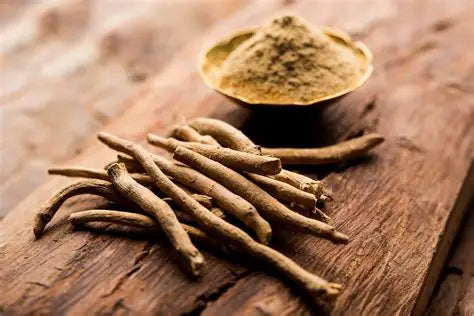
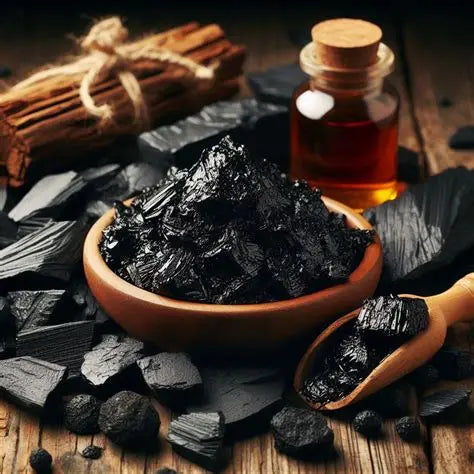

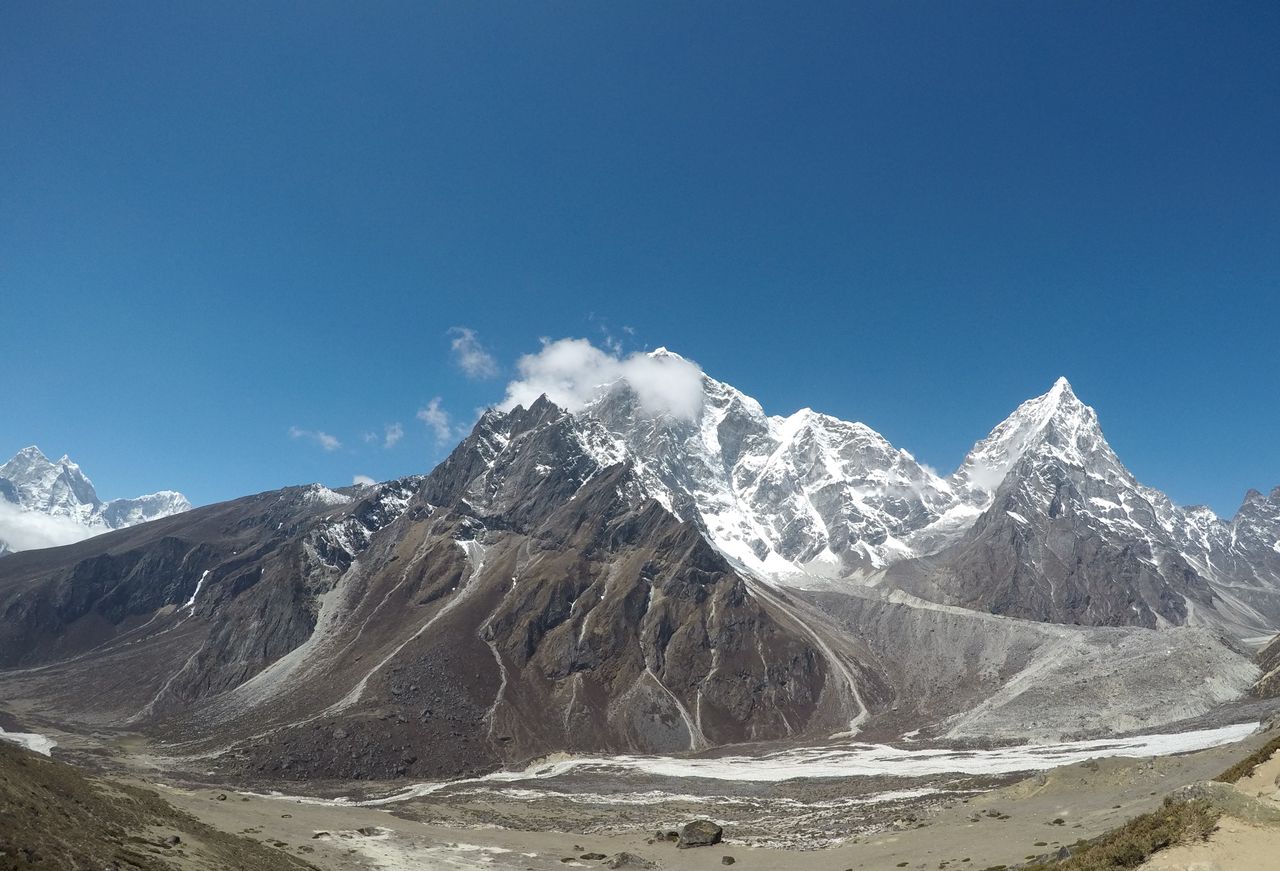
Shilajit is the core ingredient - and the oldest one. It is a mineral resin from the Himalayan rocks that Ayurveda classified for centuries among the rasayanas, remedies for male strength and fertility; its Sanskrit name translates as "conqueror of mountains." Modern measurement confirmed that tradition: in a placebo-controlled study of men aged 45 to 55, 500 mg daily for 90 days increased total testosterone by approximately one-fifth. Two capsules daily provide 600 mg - the only ingredient here whose daily dose exceeds the dose used in the study. That is why it comes first in the capsule and why two, rather than one, are recommended.
Ashwagandha is the best-documented adaptogen: in a double-blind study of 64 chronically stressed adults, morning cortisol levels were 27.9% lower than with placebo after 60 days, while in another study involving 57 men, testosterone increased by 15.3% after eight weeks. Those studies used 600 mg; here, there are 100 mg per capsule. Ashwagandha is therefore not the reason to buy these capsules - it is the reason shilajit does not act alone.
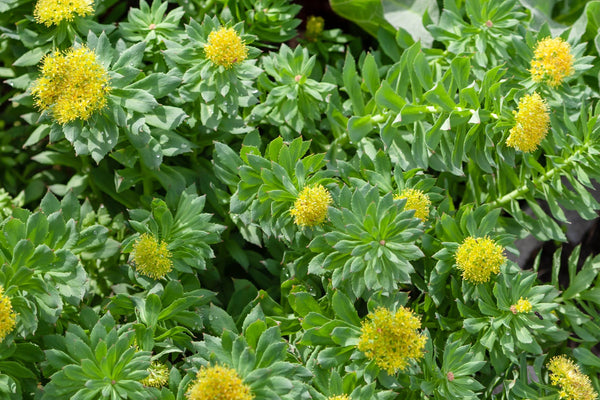
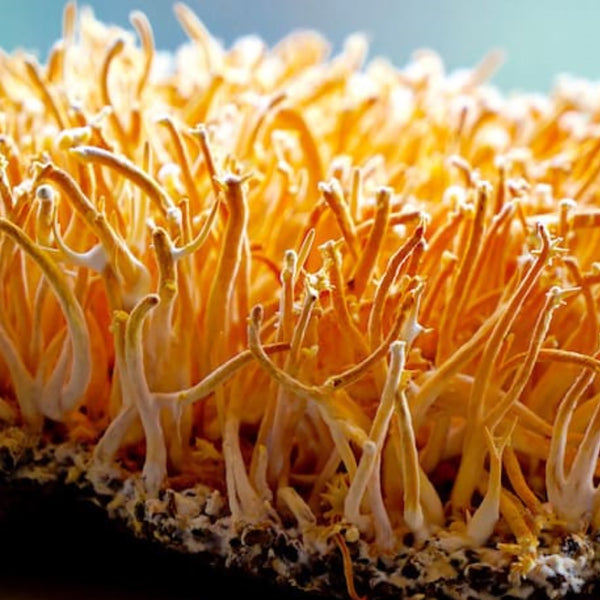
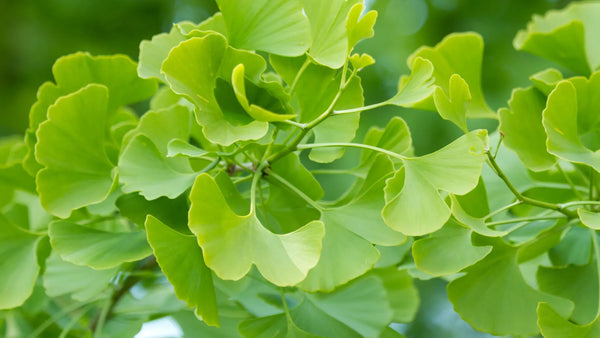
Korean ginseng and rhodiola have the same status: in five controlled studies involving 369 men, ginseng improved erectile function at gram-level doses, while rhodiola reduced fatigue in a controlled study after 28 days at 576 mg. Here, they are present in tens of milligrams. They are supporting ingredients for blood vessels and energy, not the ingredients on which the effect rests. Cordyceps, ginkgo, nettle, and turmeric supplement the formula traditionally; evidence for them in humans is more limited, and this text does not market them.
4. Why daily and why for weeks
The shilajit study lasted 90 days, while the ashwagandha studies lasted 60 days and eight weeks. Not because the researchers had time to spare, but because the stress axis adjusts gradually - hormone levels are an average, not a moment in time. A product taken "60 minutes before" therefore promises something this mechanism does not allow. That is why the capsules are taken daily and why the package contains 60 capsules: two per day is exactly one month, one per day two months. And that is precisely why the three symptoms change together, rather than one at a time: when cortisol decreases, the blood vessels, hormones, and fatigue all receive a different signal at once.
"The biggest difference was that I wasn't nervous. Everything happened naturally and without pressure."Peter, customer review
What it looks like in practice

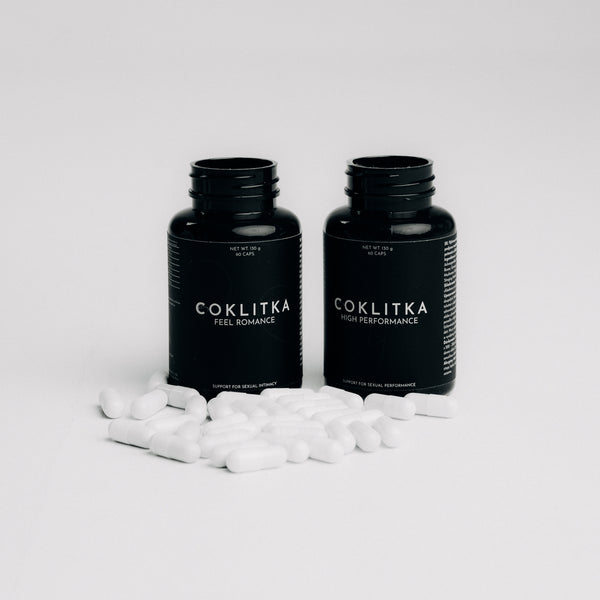
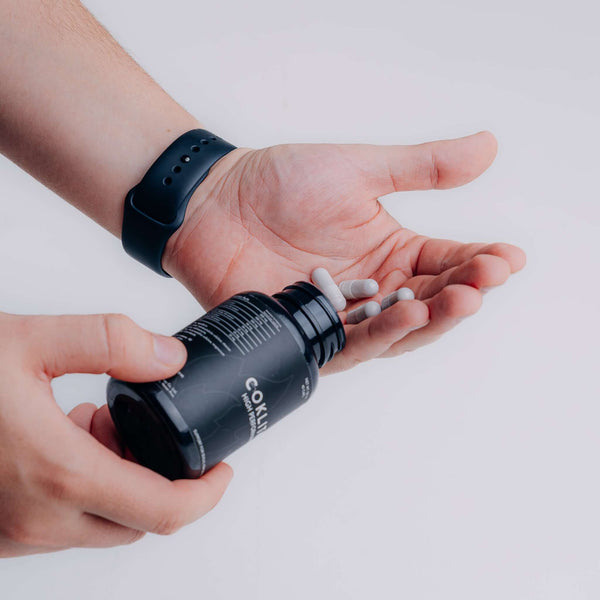
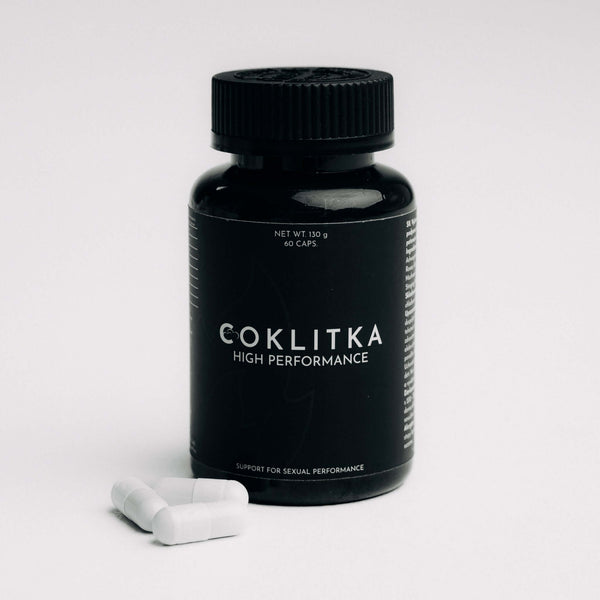
The capsules Sexual Performance Support by COKLITKY are based precisely on this principle: each capsule contains 300 mg of shilajit, 100 mg of ashwagandha, 100 mg of rhodiola, 50 mg of Korean ginseng, 50 mg of cordyceps, 50 mg of ginkgo, 25 mg of nettle, and 25 mg of turmeric. Take one to two capsules daily with water, on an empty stomach or between meals; the package contains 60 capsules, enough for a month at two per day - the duration used in the shilajit study. The price is €29.99. They are designed for men, made in Europe, and shipped in discreet packaging without labeling.

What men object to
“Will it work right away?” No. “I wasn't expecting a miracle, but I could feel a difference. I had more energy and lasted much longer than usual,” Martin wrote. Studies measured changes after 8 to 12 weeks. Anyone promising results in one night is selling something else.
“It's another chemical bomb.” “It's not a chemical bomb at all, but gentle and pleasant support,” reads one of 436 reviews averaging 4.7 out of 5.
“What if it doesn't work?” A 30-day money-back guarantee - if you're not satisfied, you'll receive a full refund. And if morning erections are also failing, that is something to discuss with a urologist; this article is not a substitute for one.
“I don't want to take hormones.” There are no hormones in the capsule. Studies on shilajit and ashwagandha measured the body's own testosterone production, not added hormones - and that's also why it takes weeks, not hours. The package arrives unmarked.

If it makes sense to you that erection, desire, and stamina have one common denominator, here are the ingredients and dosage of the capsules that target it. You can read them just as freely as you read this article.
View ingredients and dosage- Chandrasekhar K. et al. (2012). A prospective, randomized double-blind, placebo-controlled study of a high-concentration full-spectrum extract of ashwagandha root in reducing stress and anxiety. Indian J Psychol Med.
- Wankhede S. et al. (2015). Examining the effect of Withania somnifera supplementation on muscle strength and recovery. J Int Soc Sports Nutr.
- Pandit S. et al. (2016). Clinical evaluation of purified Shilajit on testosterone levels in healthy volunteers. Andrologia.
- Harman S.M. et al. (2001). Longitudinal effects of aging on serum total and free testosterone levels in healthy men. Baltimore Longitudinal Study of Aging. J Clin Endocrinol Metab.
- Sacco E. et al. (2023). Dietary Supplements for Erectile Dysfunction: Systematic Review and Meta-Analysis. Nutrients.
- Olsson E.M. et al. (2009). A randomised, double-blind, placebo-controlled study of SHR-5 extract of Rhodiola rosea in fatigue. Planta Med.
- Discussions: Modrý koník (2024–2026), HealthUnlocked Men's Health Forum, Dr.Max advice service. Quoted verbatim, anonymously.